What Are the Best Ways to Use a Compass?
Navigating through the wilderness or even just finding your way in an unfamiliar city can be a challenging task. In these situations, a compass can be your best friend, guiding you in the right direction and helping you stay on course. While many of us may have a basic understanding of how to use a compass, there are some lesser-known tips and tricks that can make this handy tool even more useful. In this article, we will explore the best ways to use a compass to navigate effectively and confidently.
Understanding the Basics
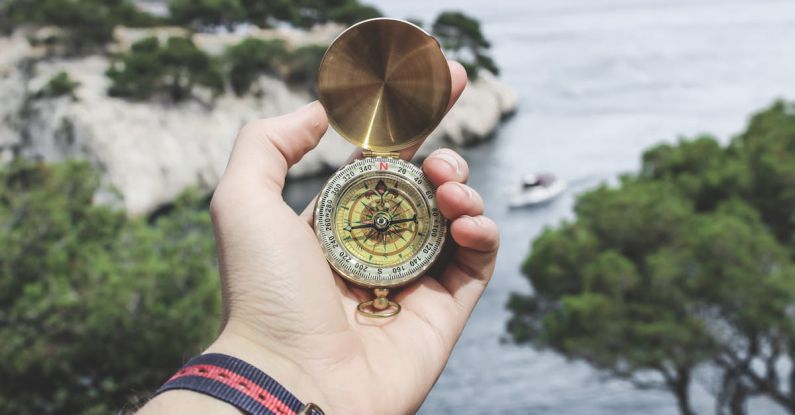
Before delving into advanced techniques, it’s crucial to have a solid grasp of the basic principles of using a compass. A compass consists of a magnetic needle that aligns itself with the Earth’s magnetic field, pointing towards the magnetic north. The direction in which the arrow on the compass points is the magnetic north, which is different from the true north. To navigate accurately, you must account for this difference by adjusting your heading accordingly.
Orienting the Compass
One of the fundamental skills in using a compass is orienting it to the map. By aligning the compass with the map, you can determine your exact location and the direction you need to travel. To do this, place the compass on the map with the edge of the baseplate connecting your current location to your destination. Rotate the bezel until the orienting lines on the baseplate line up with the north-south grid lines on the map. Once aligned, your compass is oriented, and you can accurately determine your heading.
Taking Bearings
Taking bearings is another essential skill when using a compass for navigation. A bearing is the direction from your current location to a specific point of interest, such as a landmark or destination. To take a bearing, point the compass in the direction of the target and rotate the bezel until the orienting arrow aligns with the magnetic needle. The number indicated on the bezel is your bearing, which you can then follow to reach your destination accurately.
Following a Bearing
Once you have taken a bearing, it’s essential to follow it accurately to stay on course. Hold the compass in front of you with the direction of travel arrow pointing away from your body. Turn your body until the magnetic needle aligns with the orienting arrow on the bezel. Your heading is now set, and you can walk in the direction of the arrow to reach your destination. Periodically check your compass to ensure you are staying on course and make adjustments as needed.
Using Landmarks
In addition to using your compass to navigate, you can also use landmarks to aid in your orientation. By identifying prominent features in the landscape, such as mountains, rivers, or buildings, you can cross-reference them with your map and compass to confirm your position. This technique is especially useful in areas where visibility is limited, such as dense forests or foggy conditions. By combining compass navigation with visual cues from the environment, you can navigate with greater confidence and accuracy.
Navigating at Night
Navigating with a compass at night presents its own set of challenges, but with the right techniques, you can navigate effectively even in the dark. Using a headlamp or flashlight with a red filter can help preserve your night vision while reading the compass. Additionally, marking your route with reflective tape or glow sticks can provide visual cues to guide you along your path. By practicing night navigation techniques in advance, you can feel confident navigating in low-light conditions and safely reach your destination.
Staying Calm and Confident
Perhaps the most important aspect of using a compass is staying calm and confident in your navigation skills. In stressful situations or unfamiliar terrain, it’s easy to become disoriented or second-guess your decisions. By practicing with your compass in various environments and conditions, you can build your confidence and trust in your abilities. Remember that a compass is a reliable tool that can guide you safely to your destination as long as you use it correctly and trust in its accuracy.
Conclusion: Mastering the Art of Compass Navigation
Mastering the art of compass navigation takes practice, patience, and a willingness to learn new skills. By understanding the basics of using a compass, orienting it to the map, taking bearings, following a bearing, using landmarks, navigating at night, and staying calm and confident, you can become a proficient navigator in any environment. Whether you’re hiking in the wilderness, exploring a new city, or embarking on a backcountry adventure, a compass is a valuable tool that can help you find your way with precision and certainty. By honing your compass skills and applying these best practices, you can navigate confidently and enjoy the journey knowing that you have the power to find your way no matter where your path may lead.